
REVIEW · TAHITI
Whale watching DE Humpback West Coast of Tahiti
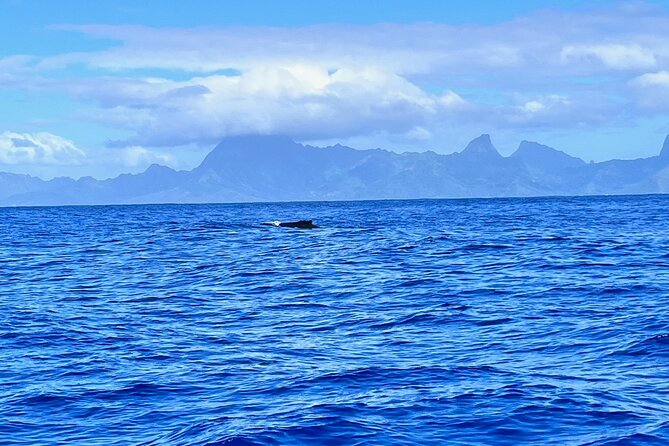
Humpback singers off Tahiti, in small numbers, are the draw. This humpback whale trip runs from the marina area in Puna’auia and follows local approach rules during the allowed season, with a trained crew ready to explain what you are seeing and why it matters.
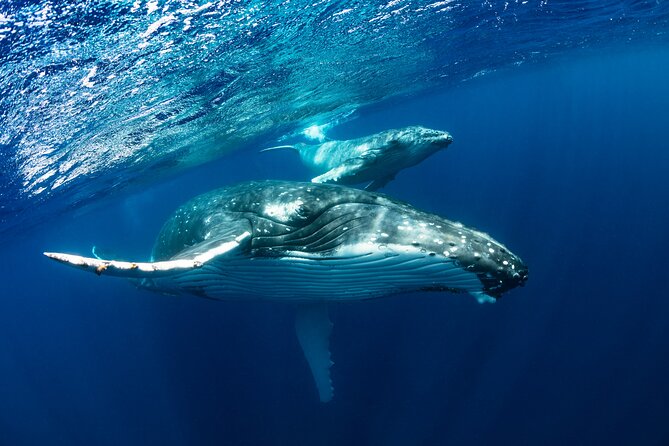
I really like two things. First, the group stays small, with a maximum of 8 travelers, so the guide talk actually lands. Second, if conditions are right, you may get a launch that lets you swim close to whales and sometimes even their young, with crew members like Jordan and Romuald (Romu) standing out in the experience.
One key consideration: a whale “launch” is not guaranteed. If you are not a strong swimmer, if you are traveling with kids under 12, or if ocean conditions do not allow it, you can still enjoy the boat ride and observation, but you should not count on getting in the water.
In This Review
- Key points worth knowing before you go
- Why this morning humpback trip works in Tahiti
- Meeting at 3 pontons Taapuna, Puna’auia: the 7:30 am reality
- The boat and small-group setup (why max 8 is a big deal)
- How whale spotting works here: observation rules and approach
- Guide-led explanations: Jordan and Romuald bring the meaning
- The whale launch and swim rules: when you can get in the water
- Snorkeling gear and safety: what is included and what you should bring
- How long it takes, what the pacing feels like
- Price and value: is $167.34 per person fair?
- Who should book this (and who should choose another option)
- Should you book this Tahiti humpback whale watching tour?
- FAQ
- What time does the whale watching tour start?
- How long is the trip?
- Where do I meet the tour?
- Is seeing humpback whales guaranteed?
- Is the snorkeling and safety equipment included?
- Can children swim with the whales?
- What are the requirements to join the launch with whales?
Key points worth knowing before you go
- Small group (max 8 travelers) keeps the trip calmer and the crew explanations easier to follow.
- Launch with whales is optional and not systematic, based on conditions and local rules.
- Swim limits are strict: up to 6 swimmers plus 1 guide in the water.
- A real swim requirement exists (200 meters without assistance) if you want to join the whale launch.
- Season timing matters: the observation period is allowed from around July 20 to November 20, subject to DIREN approval.
- Snorkeling gear and safety equipment are included, plus bottled water and coffee or tea.
More of Tahiti itself, judged the same way
Why this morning humpback trip works in Tahiti
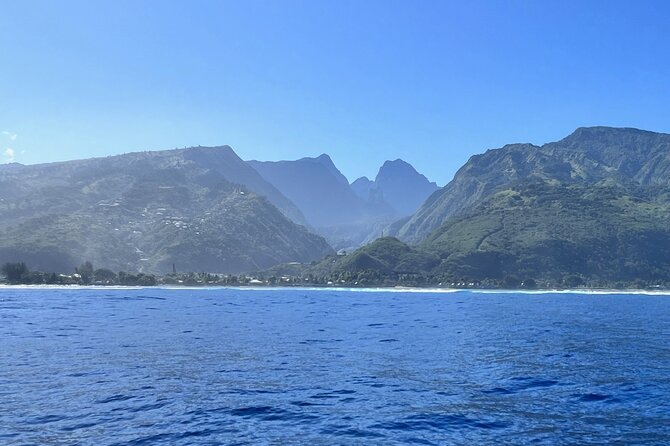
Tahiti’s humpback whale season is not just a cute idea on a brochure. It is part of a long migration routine, where humpbacks move between colder feeding grounds and warmer waters for breeding and raising young. The practical payoff for you is that this is one of the best times to watch whales doing real whale things, including group behavior and sometimes mother-calf moments.
This tour is built around that reality. You are going out in the morning, during the allowed observation window (not a random date anytime of year). And once you are on the water, the crew gives you fun, on-the-spot explanations so you are not just staring at spouts and hoping for the best.
The vibe I would expect here is “guided nature outing,” not “stand in a crowd and hope.” It is also a natural marine mammal observation activity, so the goal is seeing them while respecting approach rules. If you want a trip where you learn as you watch, this fits.
Meeting at 3 pontons Taapuna, Puna’auia: the 7:30 am reality
You start at 3 pontons Taapuna in Puna’auia. The scheduled start time is 7:30 am, and the activity finishes back at the meeting point. The total outing is about 4 hours, and many trips like this typically feel like a focused morning rather than an all-day plan.
A morning start is a good choice for whale watching. It also means you should treat this like a “wake up, show up” plan. I recommend arriving a bit early, grabbing water, and using the time to get settled before the boat heads out.
If you asked for pickup, it is possible on request, but it is not guaranteed as a standard part of the trip. If you rely on pickup, confirm that detail when you book.
The boat and small-group setup (why max 8 is a big deal)
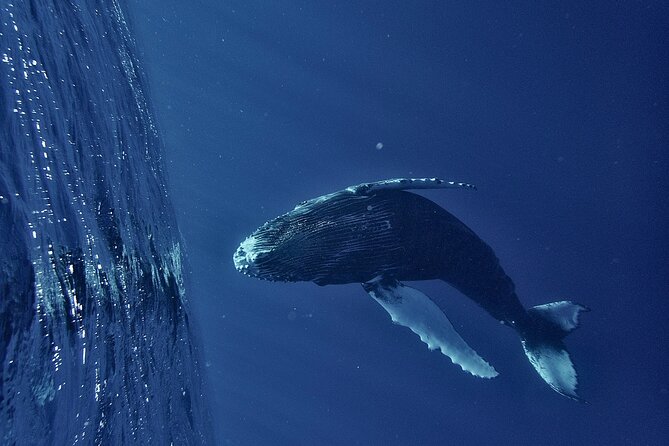
This is a maximum of 8 travelers, with a guide and captain on board. That size sounds small, and it is. In practice, that matters because everyone can hear instructions about where to position yourself, how to handle the snorkeling gear, and what the crew is doing as they look for whales.
The boat is locally built and designed for comfort, and it includes features like a slide, so the crew can bring you in and out safely depending on conditions. If you join the whale launch, you must be comfortable in the natural ocean environment, even with the slide. That is not there to be picky. It is there because on a moving boat with real ocean conditions, confidence beats panic.
You also get onboard service: bottled water, coffee and or tea, and snacks. That small comfort matters when you are sitting on open water early in the day.
Humpbacks run July to November. Other boats that find them
- Respectful whale excursion to Tahiti in 4h30★ 4.5 · 123 reviews
- Tahiti island: Whale watching Experience★ 4.2 · 79 reviews
- Guided Small Group Whale Watching and Swim Tour Tahiti★ 5.0 · 57 reviews
- Whale watching on the preserved and quiet coast of Paea (Pk26)★ 5.0 · 40 reviews
- 4 Hours of Humpback Whale Watching in Tahiti★ 5.0 · 36 reviews
How whale spotting works here: observation rules and approach
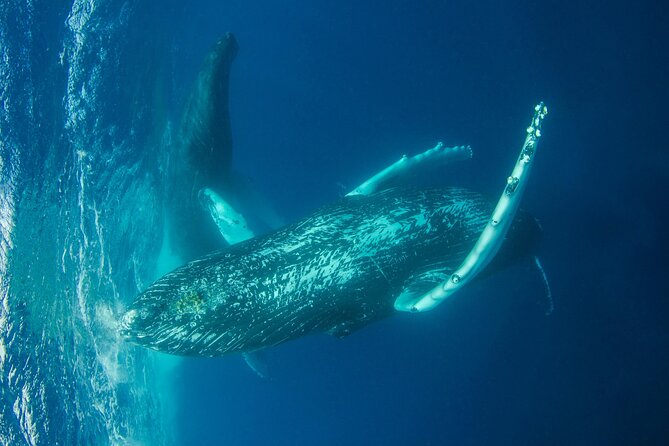
Here is the key idea: observations are not guaranteed, and the launch with whales is not mandatory or systematic. That is normal for this kind of wildlife activity, and it is also a good thing. It means the crew is not forcing encounters. They follow station rules in French Polynesia, including the way they approach whales.
What you can do as a smart passenger is adjust your expectations. Your day can be amazing even if you only observe from the boat. But if you do have your heart set on swimming with whales, you need to go in knowing the crew only does it when conditions allow and when rules are met.
The crew also defines and follows an observation period. The allowed season is from around July 20 to November 20, subject to DIREN approval. That timing is part of why this tour can be so good when it runs well, and why it might be restricted depending on the year.
Guide-led explanations: Jordan and Romuald bring the meaning
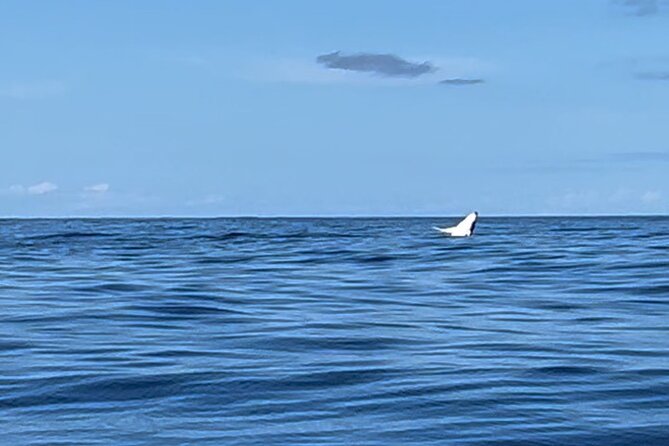
One standout from the feedback you shared: the human element. People praised the ease of the experience and credited guide Romuald, often called Romu, for making it feel straightforward and well-run. Another review specifically mentions Jordan, paired with a strong sense of service and competence.
Why does this matter? Because whale watching is half wildlife, half understanding. When a guide points out what you are likely seeing and explains humpback behavior, you spend less time guessing and more time noticing. You also learn why certain moments are special, like when whales change speed, surface patterns shift, or young are close by.
You are also dealing with a living animal that is not showing up on your schedule. A good guide helps you read the water and wait for the right signs, rather than treating the trip like a checklist.
The whale launch and swim rules: when you can get in the water
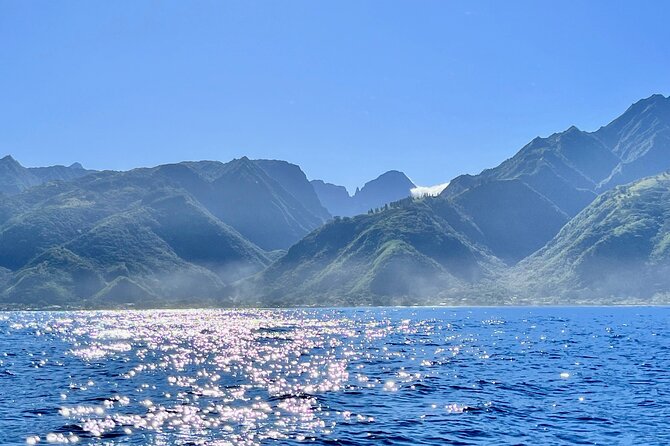
This is where the tour gets exciting, and where you should read the details carefully. If the conditions are right, the crew may offer a chance to share a special moment with the whales. But launching is not systematic, and it depends on rules and conditions.
If you want to join the launch, you must meet the swimmer requirements:
- Know how to swim at least 200 meters without assistance.
- Be comfortable in the natural ocean environment, even with the slide.
- Do not panic in contact with large marine animals, which can be 1 to 30 tonnes.
There are also clear limits for who can be in the water:
- Maximum permitted size in the water is 6 swimmers plus 1 guide.
Kids rules are also explicit:
- Children under 12 do not launch with whales.
- Adults who are non-swimmers or observers also do not launch with whales.
- Children aged 12 to under 18 can join only with parental authorization, and if there is doubt, children may participate as observers on board.
- The crew can act in the best interest of passengers.
Here is the practical takeaway: even if you book this expecting the swim, you should plan for an “observation-first” experience. If you qualify for swimming and you feel calm and confident in moving ocean water, then you are in a good position to take advantage of the launch if it happens.
Snorkeling gear and safety: what is included and what you should bring
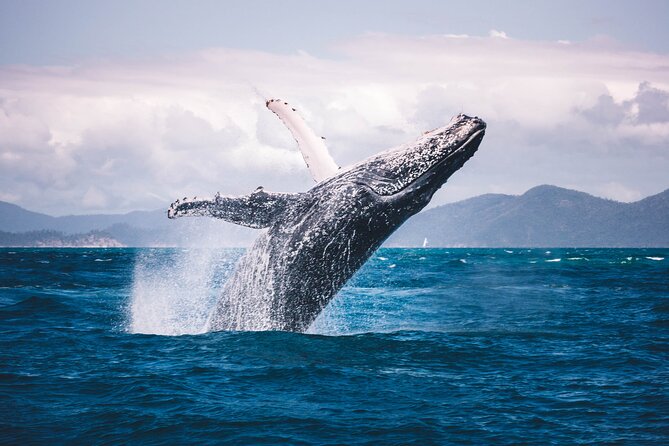
The tour includes the snorkeling equipment and safety equipment, plus bottled water and snacks, and coffee or tea. So you do not need to carry your own snorkel set for this outing, which is a real value in Tahiti where packing can get out of hand fast.
You should still plan for comfort. You will be in the ocean environment, so think in terms of how you handle cool water, sun, and wind, and how quickly you can reset if you get splashed or you need a breather. The requirement to be comfortable with the slide is a strong hint that you should not treat this like a lazy pool float.
Physical fitness is described as “moderate physical fitness level,” which I interpret as: you do not need to be an athlete, but you should be able to handle moving water, getting in and out safely, and staying calm around large animals.
If you are traveling with any injury, temporary discomfort, or reduced mobility, inform the operator in advance. They say they will do their best to adapt your welcome.
How long it takes, what the pacing feels like
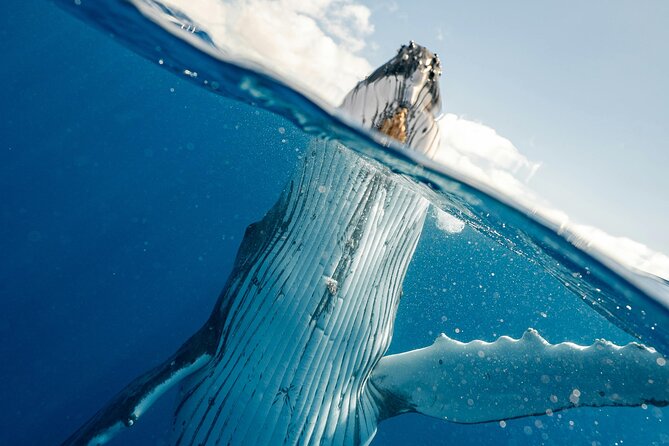
You should plan for about 4 hours total, with the typical visit lasting around 3 to 4 hours. The schedule is built for spotting, observation time, and then a possible launch if rules and conditions fit.
Because the tour is wildlife-driven, you might notice the pacing is not rigid. One trip might spend longer searching or waiting for the whales to surface in a safe, legal way. Another trip might shift quickly when a whale group shows up close enough for the crew to consider a launch.
Your job is easy: show up early, follow crew instructions, and stay patient. Patience is not glamorous, but it is what helps you see more.
Price and value: is $167.34 per person fair?
The price is $167.34 per person, and on average people book about 18 days in advance. For whale watching, this is in the “serious outing” category. The good news is what you get for the money.
You get:
- A guide and onboard support
- Safety equipment
- Bottled water
- Coffee and or tea
- Snacks
- Snorkeling equipment
You also get a small group experience, with a maximum of 8 travelers, and a chance to swim if you meet the requirements and conditions cooperate. Even though whale launches are not guaranteed, the trip is not just you paying for sitting on a boat. It is also the instruction, safety setup, and wildlife-focused search.
Where the value can feel lower is if you really want the swim and the day ends up as observation only. That is the trade-off in this style of tour. The upside is that when the whales are cooperative and you meet the requirements, you can have a once-in-a-season moment.
Who should book this (and who should choose another option)
This works best if you:
- Want a guided humpback whale watching outing with real explanations
- Are comfortable being flexible, because observation and launches are not guaranteed
- Meet the swimmer requirement if you want the chance to enter the water
- Prefer a smaller group over big boats and big crowds
It may not be ideal if you:
- Get stressed in open water or around large animals
- Are traveling with kids under 12 who want the launch (they will not launch with whales)
- Are very sensitive to early mornings, since it starts at 7:30 am
- Can’t accept that wildlife rules and ocean conditions may limit the experience that day
If you are a non-swimmer, the tour can still be a strong observation option. Just go in knowing the launch with whales is not included for non-swimmers or adult observers.
Should you book this Tahiti humpback whale watching tour?
If you want a guided, small-group humpback experience in Tahiti, I think this is a solid choice, especially during the allowed season window. The biggest reason to book is simple: you are not only watching whales, you are getting crew-led guidance, snacks and drinks, and snorkeling gear if you qualify to use it.
The decision comes down to one question: are you okay with not knowing if you will swim with whales? If yes, then you are set up for a great morning, and the odds can be strong when the whales are near. If no, you might still enjoy the boat ride, but the uncertainty could feel frustrating.
FAQ
What time does the whale watching tour start?
The activity starts at 7:30 am.
How long is the trip?
The duration is about 4 hours (approx.), with an average visit typically described as 3 to 4 hours.
Where do I meet the tour?
You meet at 3 pontons Taapuna, Puna’auia, French Polynesia. The tour ends back at the meeting point.
Is seeing humpback whales guaranteed?
No. Observations are not guaranteed, and the launch with whales is not mandatory and not systematic.
Is the snorkeling and safety equipment included?
Yes. Safety equipment and snorkeling equipment are included, along with bottled water, coffee and or tea, and snacks.
Can children swim with the whales?
Children under 12 years do not launch with whales. Children between 12 and under 18 require parental authorization. If there is doubt, children may participate as observers on board.
What are the requirements to join the launch with whales?
To join the launch, you must be able to swim at least 200 meters without assistance and be comfortable in the natural ocean environment. You also must not panic in contact with large marine animals.
More Humpback Encounters

The Rest of Our Island Reviews




Tahiti, Beyond This One
Other French Polynesia trips in our review pile
- Papeete Market Place
★ 3.0 · 3 reviews - Whale watching DE Humpback West Coast of Tahiti
★ 5.0 · 3 reviews - Private Transfer Papeete Urban Area to Tahiti Airport PPT by Van
★ 5.0 · 3 reviews - Tahiti: Private Half Day Culture and Nature Highlights Tour
★ 5.0 · 3 reviews - Wholesale Fishing in Poti Marara at Tahiti Teahupoo Peninsula
★ 5.0 · 4 reviews - Private Half Day Sailing Excursion on the Lagoon of Tahiti
★ 5.0 · 4 reviews
Tahiti Island Tours, compared.
 ★ 5.05 Hours Tahiti Island Tour – West and East CoastFrom $791,020 reviews
 ★ 4.5Crossing Island of Tahiti 4×4 Mountain, Waterfall, River, BasinsFrom $138532 reviews
 ★ 5.0Découvrez le Mana durant la traversée de Tahiti en 4×4 SafariFrom $140456 reviews
 ★ 4.5Unique Tahiti Tour – personalised, small group east coast tourFrom $183314 reviews
 ★ 4.5Crossing Over Tahiti Island Safari 4×4From $137307 reviews
 ★ 5.0Unique Tahiti Tour – personalised, small group west coast tourFrom $183286 reviews
 ★ 4.7From Tahiti: Tetiaroa Island Tour by Sailing CatamaranFrom $227156 reviews
 ★ 5.0Unique Tahiti tour to Teahupoo, small group, full day combo tourFrom $261155 reviews
Browse the lists this tour appears in