
REVIEW · TAHITI
Papeete City Tour, 3hours (on Tahiti)
Papeete punches above its size. In just over three hours, you get a tight look at island life and island politics, with stops that explain how French governance shapes modern Polynesian life at the Présidence de la Polynésie française and gives you real time to browse the Paraita market. I also like the way the tour blends history and practical sightseeing so you come away with a clearer map of Papeete, not just photos. One possible drawback: the schedule is busy, so the market shopping window is set, and you’ll need to choose what you want to focus on.
The logistics are friendly from the start, with pickup from your accommodation or an agreed meeting point and a small private group capped at eight. You’ll travel with bottled water included, and you’ll use a mobile ticket, which makes check-in painless. The overall rhythm is efficient, which is great in a place where traffic and heat can slow you down.
What rounds out the experience for me is that it’s not just drive-by sightseeing. You can walk or drive past the street art, and you can finish with a short stop at the Musée de la Perle Robert Wan to learn how black pearls are cultivated in French Polynesia. If you get hungry, lunch is on your own, but snacks are available to buy in the market.
In This Review
- Key points worth knowing before you go
- Why Papeete’s city center feels like a living timeline
- Price and what you get in a 3 hour 15 minute private group
- Pickup, mobile ticket, and the Lydia factor
- Stop 1: Présidence de la Polynésie française and the real meaning of French governance
- Stop 2: Assembly area, ancient wetlands, and the Queens bath connection
- Stop 3: Cathedral zone, street art choice, and the Pomare VI town hall link
- Stop 4: Paraita market, oldest institution vibes, and 30 minutes to shop
- Stop 5 option: Musée de la Perle Robert Wan and the black pearl story
- Planning your day after the tour, and how to get the most out of the time
- Should you book the Papeete City Tour with Lydia?
- FAQ
- How much does the Papeete City Tour cost?
- How long is the tour?
- Do they pick you up from your accommodation?
- Do I need a paper ticket?
- What is included and what is not?
- Is there time for shopping at the market?
- Is the pearl museum part of the tour?
- What if the weather is poor?
- Can I cancel for a full refund?
Key points worth knowing before you go
- Lydia’s adaptable guiding style: she adjusts the tour to your interests and to the weather
- A government-focused stop at the Présidence: learn how the French republic ties into everyday Polynesian life
- Queens bath and ancient wetlands context: see why this area matters beyond scenery
- Paraita market time for actual shopping: includes a guided market visit plus about 30 minutes to browse
- Musee de la Perle Robert Wan option: a clear intro to black pearl cultivation
- Comfort and careful driving in traffic: a comfortable, cool vehicle and cautious driving even when things get busy
More of Tahiti itself, judged the same way
Why Papeete’s city center feels like a living timeline
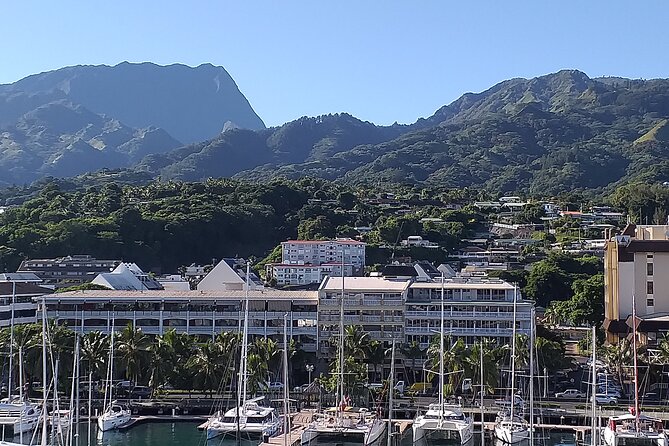
Papeete can look like a simple port town at first glance. Then the details start clicking. This tour treats the city like a timeline you can walk through, starting with the government buildings and moving into daily life at the market. You also get the story behind the place name, Papeete meaning water basket, and that helps everything make more sense.
The guide frames why the waterfront and nearby springs matter. Papeete’s beginnings go back to 1820, when Pastor Crook built a church on the seafront, a site now occupied by the main Protestant church. The wider city of Papeete was created in 1890, but the tour emphasizes that the land and water were important long before that. That context gives you a better feel for why you’ll see colonial style architecture, old wetland references, and today’s everyday street life all in the same day.
You’ll also notice the balance of viewpoints. The route includes official sites, like the presidential and assembly areas, plus everyday stops like the cathedral zone and the market. If you like understanding how a place works, not just what it looks like, this kind of structure really helps.
Finally, you’ll get to see how French administration shows up in real space. You’re not stuck with theory. The tour turns it into something you can point to, like the modern presidential building finished in 2004.
Price and what you get in a 3 hour 15 minute private group
At $399 per group for up to eight, this isn’t a budget tour, but it can still be good value depending on your group size. If you fill the max eight seats, you’re looking at about $50 per person. That’s the sweet spot for private guiding in a city where you want local context and time efficiency.
You’re also buying time and flexibility. The total duration is about 3 hours and 15 minutes, and within that window the tour hits multiple key areas. Instead of you figuring out what to see and when, a driver and guide handle the pacing and the narration. It’s the difference between trying to do Papeete on your own, with traffic and limited time, versus getting a planned flow.
A practical detail I appreciate is that entry is free for the stops listed for tickets, including the presidential and assembly areas, the cathedral area time, and the market and pearl museum stops described in the schedule. Even though things are free, the value comes from having someone explain what you’re seeing and connect it to Polynesian history and modern life under French governance.
The only real tradeoff is the tour is tight. You can’t treat this as an open-ended wandering day. If your goal is to browse for hours, especially in the market, plan to do the deeper shopping outside the tour window.
Pickup, mobile ticket, and the Lydia factor
The day starts with pickup from your accommodation or a meeting point you’ve agreed on. That matters in Papeete because you don’t want to burn time locating buses, taxis, or meeting spots. It also sets a calm tone. You’re not rushing at the start.
I like that the group is private for your party only. With up to eight people, it stays manageable and easier for questions. You’re not competing with strangers for attention.
The guide name you’ll most likely hear on this tour is Lydia. From what I’ve learned about her guiding approach, she combines clear storytelling with energy, and she’s willing to adjust. That can be a big deal if you’re dealing with weather changes. She also adapts to your interests, which means you can steer the focus a bit, instead of being dragged through a rigid script.
On the comfort side, the vehicle is described as comfortable and cool, and the driver is careful and cautious even in heavy traffic. That might sound like a small thing, but in a city stop tour, it’s what keeps the day pleasant. If you’re heat-sensitive or motion-sensitive, that extra care matters.
Other ways to spend a morning in Papeete
- Papeete : walking tour★ 4.9 · 69 reviews
- Private Transfer Tahiti Airport PPT to Papeete Urban Area by Van★ 4.5 · 22 reviews
- Shared 2 Hour Papeete Walking Tour★ 5.0 · 13 reviews
- Private 2 Hour Walking Tour in Papeete★ 5.0 · 8 reviews
Stop 1: Présidence de la Polynésie française and the real meaning of French governance

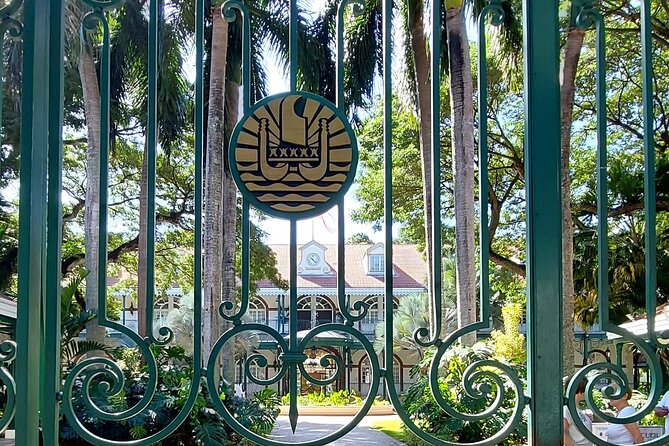
You first head to the Présidence de la Polynésie française, a colonial style building completed in 2004. This is a key stop because it turns politics into place. You’re not just told that French Polynesia is connected to France. You learn how that connection works through the structures here today, including the current president.
Even if government isn’t your favorite topic, I’d still consider this stop worthwhile. Why? Because it gives you a framework for everything you’ll see next. Once you understand the role of French institutions in local life, the rest of the tour reads differently. Even the way people talk about identity and culture has a political backbone.
The timing is short, around 15 minutes at Stop 1, and admission is free. So you’re not sacrificing the day to sit around. You’re getting just enough context to anchor the tour, then moving on.
One thing to keep in mind: because it’s a political site, this part is more focused on explanation than on long photo opportunities. If you love architecture, you’ll likely enjoy it, but don’t expect a free-form hangout.
Stop 2: Assembly area, ancient wetlands, and the Queens bath connection
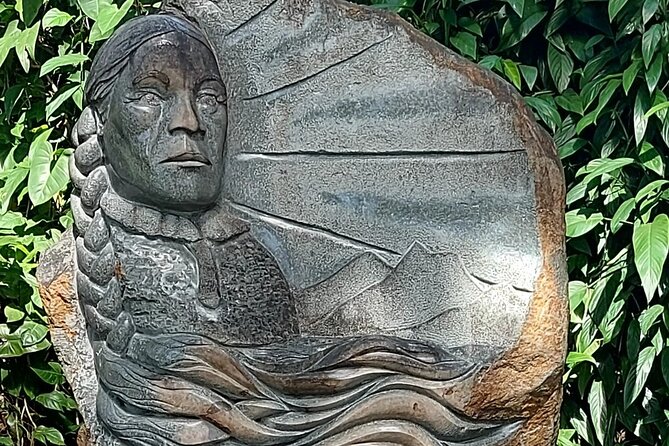
Next you’ll move to the Assembly area, where representatives debate laws. The setting matters here. The tour describes the Assembly as being situated on ancient wetlands near a natural spring known today as Queens bath. That’s a theme you can feel throughout Papeete. Water and land shaped the place, and the city still carries those clues.
This stop is about more than a landmark. It helps you understand how modern political life sits beside older environmental realities. The guide ties the Assembly gardens and Queens bath back into the story of the area, so you’re not just looking at buildings. You’re seeing a relationship between governance, land, and natural springs.
Admission for this segment is free, and the scheduled time is about 20 minutes. That works well because it keeps the pacing moving while still giving you enough information to connect the dots.
If you’re the type who likes meaningful context, you’ll appreciate this stop. If you only want quick scenery, you might feel this is more explanation-heavy than photo-heavy. But even then, it tends to make the rest of Papeete more understandable.
Stop 3: Cathedral zone, street art choice, and the Pomare VI town hall link

After the government stops, the tour shifts into the city’s cultural spine. You’ll either drive by or walk through Papeete depending on your ability and preference. You’ll see the cathedral in a zone described as Polynesian wetlands that were once part of birthing experience. That detail is powerful, because it explains why this area has such meaning beyond modern tourism.
From there, you’ll get street art from the cathedral area toward the town hall. The town hall is described as being built in the style of Queen Pomare VI’s palace. This is one of those details that can look like just an architectural reference until you know who Pomare VI was and why this design matters locally.
I like the walk-or-drive option. It lets you match the tour to your energy level that day. If you’re traveling with someone who wants photos and slower pacing, walking can be a better fit. If you need to conserve energy, driving past the street art keeps things light without losing the visual payoff.
This segment is about 15 minutes. It’s short, but it’s placed at a smart moment in the tour. After the heavier context of the political stops, a lighter visual shift helps keep your brain from melting.
Stop 4: Paraita market, oldest institution vibes, and 30 minutes to shop
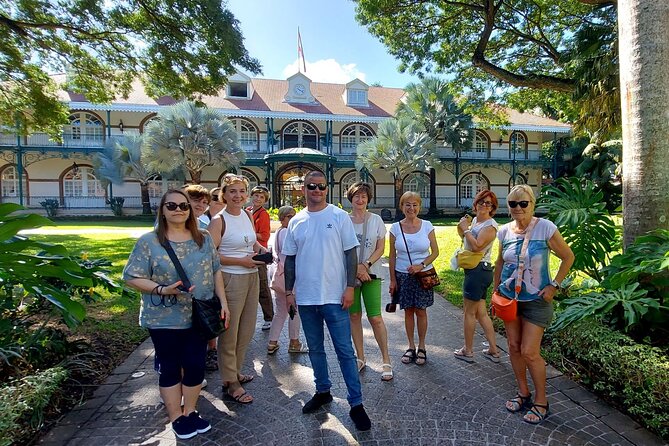
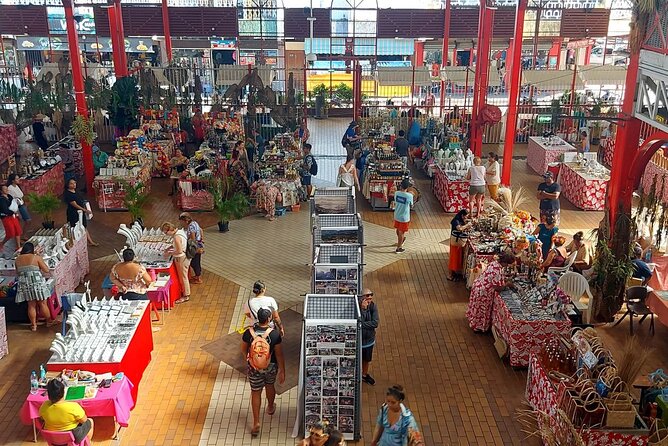
The heart of daily Papeete life is the market, and this tour gives it real time. You’ll visit the Paraita open air market, described as the oldest institution in Papeete. It has been on this site since 1869 and was renovated in 1987 when the market was tripled in size.
One of my favorite parts of this stop is that you don’t just get dropped in. You get a guided visit of the market’s lower level, which helps you understand what you’re seeing before you start shopping.
Then you get about 30 minutes for shopping. That is plenty of time to browse, compare, and pick something small if you know what you want. But it’s not enough time for a long, slow scavenger hunt. Treat that half hour like a focused mission, then plan to continue later on your own if you fall in love with a stall.
The market is open very early, with hours listed as 5am to 4pm Monday to Saturday. You’ll also see that it starts at 4am on other days, so you’re entering the market during a window where it’s already part of people’s routine. Admission is free for the market stop, but you’ll handle your own snacks and meals.
A practical note: lunch isn’t included in the tour, and meals aren’t covered. The good news is snacks are available for purchase in the market. If your stomach is sensitive, eat before you go or pick up a snack during that browsing time.
Stop 5 option: Musée de la Perle Robert Wan and the black pearl story
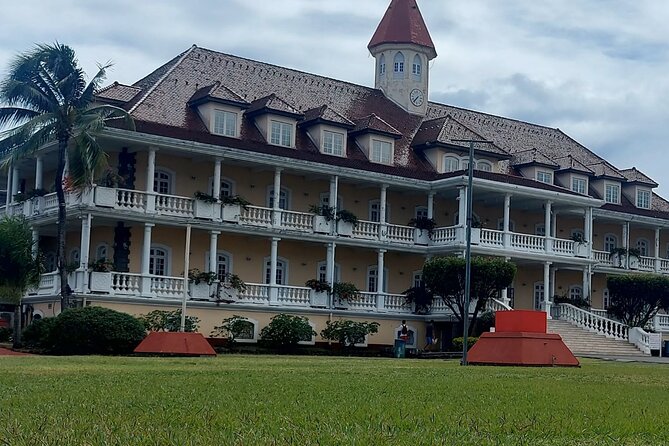
If you want to round out the day with a cultural and industry angle, you can add the Musée de la Perle Robert Wan. It’s a short stop, scheduled for about 20 minutes, and admission is free.
This museum’s focus is black pearl cultivation. The museum is named for Robert Wan, described as the first to start cultivating black pearls in the lagoons of the Tuamotu and Gambier islands. That piece of information gives the museum a clear purpose. It’s not just decor and souvenirs. It’s an explanation of how the pearls connect to specific lagoon regions in French Polynesia.
Even if you’re not buying jewelry, I think this is a smart end to the tour. It connects Papeete to the wider islands and shows how something you see on a necklace is tied to a whole cultivation process and a specific geography.
The tour can finish with this museum stop and then return you to your accommodation. But if you’d rather keep exploring, you can stay in town for lunch or dinner instead.
Planning your day after the tour, and how to get the most out of the time
Because this is a set route, I recommend treating it as your orientation day. You’ll come out with a better sense of where you want to go back for a second look, especially around the cathedral zone, the street art corridor, and the market area.
If you’re planning a later meal, remember lunch is on your own. The tour is designed to end back at your accommodation unless you choose to remain in town. That choice matters if you’re trying to fit in a specific restaurant reservation.
Also, keep in mind that it runs in a small private group and lasts about a quarter of a day. It’s not meant to replace a full island excursion. It’s meant to connect you to Papeete itself.
One more practical point: this tour is often booked ahead, with an average booking window of about 43 days. That tells me it’s popular, so if your travel dates are fixed, you’ll want to lock it in early.
Should you book the Papeete City Tour with Lydia?
I’d book this if you want a guided, well-paced look at Papeete that explains how French governance, local identity, and everyday life connect. The standout strength for me is that Lydia brings energy and adapts, and you’re not stuck with a one-size-fits-all script. Add in the comfortable, careful driving and the clear time for market shopping, and you get a day that’s both informative and doable.
I would hesitate if you want a long free-roaming day. This tour moves on purpose, and market shopping is limited to about 30 minutes. If you’re the type who needs hours to browse and haggle, you may want to do the market again on your own after you’ve had the guided orientation.
So my rule of thumb: book it if you want context plus efficient sightseeing. Skip it if you only want wandering and don’t care about the political and cultural explanations behind what you see.
FAQ
How much does the Papeete City Tour cost?
It costs $399 per group for up to 8 people.
How long is the tour?
The tour lasts about 3 hours and 15 minutes.
Do they pick you up from your accommodation?
Yes. Pickup is offered from your accommodation or an agreed meeting point.
Do I need a paper ticket?
No. The tour uses a mobile ticket.
What is included and what is not?
Bottled water is included. Lunch and meals are not included, but snacks are available to purchase in the market.
Is there time for shopping at the market?
Yes. After a guided visit of the market’s lower level, you get approximately 30 minutes for shopping.
Is the pearl museum part of the tour?
If wished, the tour can finish with a short visit to the Musée de la Perle Robert Wan before returning to your accommodation.
What if the weather is poor?
This experience requires good weather. If it’s canceled due to poor weather, you’ll be offered a different date or a full refund.
Can I cancel for a full refund?
Yes. You can cancel up to 24 hours in advance for a full refund.
The Rest of Our Island Reviews



Papeete on Foot and by Plate




Tahiti, Beyond This One


Other French Polynesia trips in our review pile
- Tahiti: Full Day Tour with Private Flight EN Cessna (Moorea & Tahiti)
★ 3.5 · 3 reviews - Papeete City Tour, 3hours (on Tahiti)
★ 5.0 · 3 reviews - Tahiti: Northeast Coast Waterfalls&Viewpoints Half Day Tour
★ 5.0 · 3 reviews - Private Tour of Tahiti’s East Coast 3hours
★ 5.0 · 4 reviews - Tahiti : Tour de l’île (Full Day) avec taxi boat (Teahupoo)
★ 5.0 · 5 reviews - Private : Tahiti Museum & Circle Island Tour, Afternoon Tour (5h)
★ 4.0 · 6 reviews
Tahiti Island Tours, compared.
 ★ 5.05 Hours Tahiti Island Tour – West and East CoastFrom $791,020 reviews
 ★ 4.5Crossing Island of Tahiti 4×4 Mountain, Waterfall, River, BasinsFrom $138532 reviews
 ★ 5.0Découvrez le Mana durant la traversée de Tahiti en 4×4 SafariFrom $140456 reviews
 ★ 4.5Unique Tahiti Tour – personalised, small group east coast tourFrom $183314 reviews
 ★ 4.5Crossing Over Tahiti Island Safari 4×4From $137307 reviews
 ★ 5.0Unique Tahiti Tour – personalised, small group west coast tourFrom $183286 reviews
 ★ 4.7From Tahiti: Tetiaroa Island Tour by Sailing CatamaranFrom $227156 reviews
 ★ 5.0Unique Tahiti tour to Teahupoo, small group, full day combo tourFrom $261155 reviews
Browse the lists this tour appears in